

The Head of Government chairs a meeting to monitor the implementation of the reform of the higher education, scientific research, and innovation system
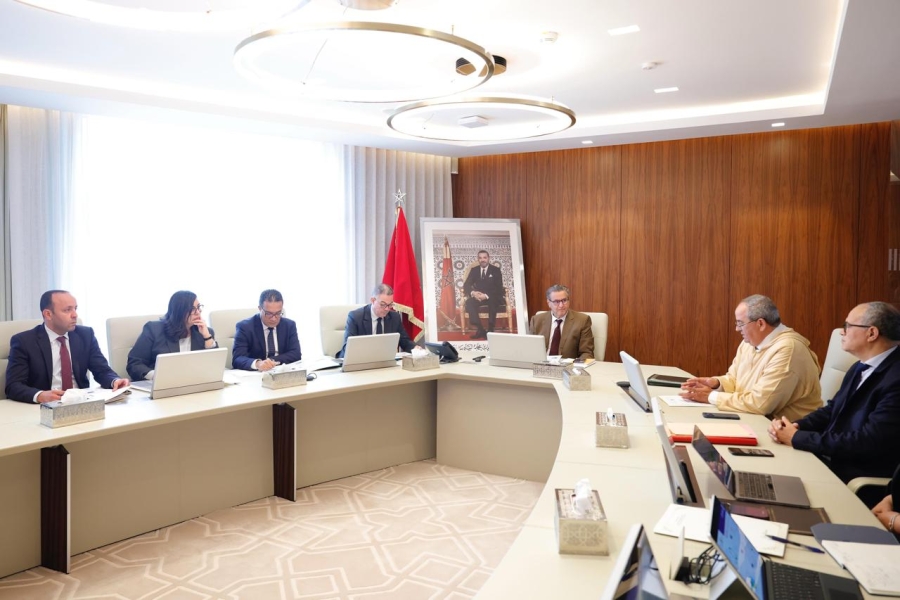
The Head of Government, Mr. Aziz Akhannouch, chaired a meeting on Wednesday, March 11, 2026, in Rabat, dedicated to monitoring the implementation of the reform of the higher education, scientific research, and innovation system. This meeting provided an opportunity to review the progress made and to address future structuring projects, as part of the efforts aimed at building a national university of excellence, in accordance with the High Royal Directives.
At the beginning of this meeting, the Head of Government emphasized that the reform of the higher education, scientific research, and innovation system, implemented in accordance with the High Royal Directives, constitutes a governmental conviction due to its significant contribution to promoting the quality of human capital in many vital sectors, and as one of the prerequisites for overall development in our country.
The Head of Government indicated that in order to consolidate this reform, the government has ensured an increase in the general budget of the Ministry of Higher Education, Scientific Research, and Innovation by 30% between 2021 and 2025. This has made it possible to strengthen the number of teaching, administrative, and technical staff, improve their social situation, and also enhance the accessibility of universities and increase their hosting capacity.
This meeting was an opportunity to examine future structuring projects, particularly regarding the reorganization of the Moroccan public university map, in order to enshrine spatial equity; in addition to presenting the project for the creation of a faculty of medicine, pharmacy, and dentistry in Kenitra. The objective is to strengthen the training offer at the regional level and contribute to alleviating the pressure experienced by the faculty of medicine and pharmacy in Rabat.
During the meeting, the issue of strengthening university accommodation was also addressed through the development of an innovative offer for students and the equipping of university residences within the framework of a public-private partnership. Five projects have thus been launched in five university cities (Agadir, El Jadida, Oujda, Nador, and Beni-Mellal), with a capacity of 11,000 beds, ahead of the launch of a second phase of university accommodation projects next April, with a capacity of 100,000 beds.
Furthermore, the meeting highlighted several indicators demonstrating the development of the university offer and the broadening of universities' attractiveness. The overall number of students has thus increased by 4.8% compared to the previous academic year, reaching over 1.3 million students.
Regarding the governance component, the meeting allowed for the monitoring of the process of harmonizing the legal arsenal with the provisions of framework law 51.17 and reviewing other organic texts issued or in the process of being adopted. The "Elogha-sup" language learning platform was also presented across various universities. Designed by a Moroccan team, this platform includes English, French, Spanish, Arabic, as well as the Amazigh language.
Concerning the support for sectoral strategies related to pedagogical reform, 10,841 academic seats were opened during the academic year, as part of the program to increase the density of healthcare personnel by 2030. The academic seats opened under the training program for primary and secondary school teachers amounted to 20,404 seats. Moreover, the program to increase the number of public university graduates in digital fields by 2027 continued with 27,190 new students.
On the pedagogical front, the meeting highlighted a diversification of the training offer with the establishment of some 366 new academic programs and the development of bridges between different branches, specialties, and institutions, as well as the implementation of mechanisms ensuring flexibility in orientation and changing curricula. This will enhance opportunities for students to resume their studies in case of interruption and will limit the phenomenon of university dropout.