

Head of Government presides over the first board of directors of the Territorial Health Grouping of the Rabat-Salé-Kénitra Region

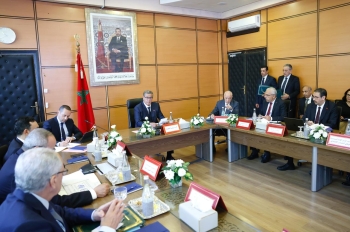
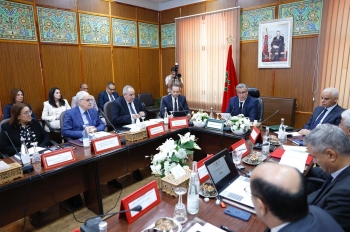
The Head of Government, Mr. Aziz Akhannouch, chaired the first Board of Directors meeting of the Territorial Health Grouping (GST) of the Rabat-Salé-Kénitra region on Thursday, May 14, 2026, in Rabat. The Board approved the grouping’s organizational chart, the model status for GST health professionals, its action plan, and its budget for the year 2026. This meeting is part of the ongoing momentum to implement territorial governance mechanisms, in accordance with the High Guidelines of His Majesty King Mohammed VI—May God Assist Him—aimed at initiating a profound and comprehensive reform of the national health system. These efforts seek to ensure the implementation of the project to generalize social protection and to strengthen territorial equity in access to healthcare services.
At the beginning of the meeting, the Head of Government affirmed that the creation of the Territorial Health Groupings constitutes, in line with the Royal Vision, a mechanism that ensures functional complementarity between all hospital establishments within the region. This is based on a regional medical program that takes territorial specificities into account. He also stressed the importance of mobilizing the various relevant departments to accelerate the operationalization of the remaining Territorial Health Groupings.
The Head of Government noted that the establishment of the GST for the Rabat-Salé-Kénitra Region serves as an essential lever for restructuring the regional healthcare offering. This is achieved by strengthening convergence between various stakeholders and upholding the principles of proximity, quality, and efficiency. Such measures will solidify the region’s position as a medical hub of reference at both national and continental levels, given the flagship hospital facilities it possesses.
During this meeting, the Director General of the Rabat-Salé-Kénitra GST, Mr. Brahim Lakhal, presented the various organizational and financial aspects related to the grouping’s operations, including the GST action program, its draft budget for the 2026 fiscal year, its proposed organizational chart, and draft resolutions. Various points relating to the grouping's operations were also examined, focusing on strengthening coordination between different hospital establishments and improving the patient care pathway and the quality of services provided.
This project takes into account the fundamental principles of the national health system restructuring project, notably through the creation of organizational structures responsible for coordinating the regional medical program. It also aims to strengthen coordination between various levels of healthcare to ensure a clear and coordinated care pathway for users, while providing a practical platform for the establishment of family health services.
Furthermore, it provides for the creation of a continuous training platform for health professionals within the GST, in harmony with the provisions of Law 09/22 relating to the health profession. This is based on the principle that human resources are one of the primary keys to the Grouping’s success, alongside other organizational structures—particularly those responsible for digitalization, planning, monitoring public health indicators, and administrative management.
Emphasis was also placed on the need to accelerate the implementation of an integrated health information system as an essential lever for governance, monitoring, and improving care pathways. This system will also enhance resource management efficiency and provide accurate data to facilitate decision-making at regional and national levels.
The meeting also provided an opportunity to emphasize the importance of continued mobilization of all stakeholders to meet the challenges associated with the increasing demand for health services in this region of nearly 5 million inhabitants. This growth places increasing pressure on infrastructure and human resources, highlighting the need to guarantee citizens access to quality health services in accordance with the principles of equity and efficiency.
The acceleration of the process to establish Territorial Health Groupings follows the positive momentum recorded during the first pilot experience launched in the Tangier-Tetouan-Al Hoceima region, particularly regarding the reinforcement of medical staff and the improvement of coordination between health establishments in that region.